Tablet Catchers
Welcome to scot-rail.co.uk, Scotland's online railway community. The group is for any rail enthusiast interested in the railways and trains of Scotland. It not only consists of the wiki that you're reading now, but a busy online forum and mailing list, which was accessible to registered users. From April 2024 the forum has closed, with a replacement started on Groups.io.
Breadcrumb navigation
The term Tablet Catcher usually refers to automatic token exchange apparatus fitted to the cab sides of locomotives that operate on single line railways. The term can also apply to the lineside equipment for both automatic and manual token exchanges.

Mansons Tablet Catcher on preserved GNSR No.49, Gordon Highlander Photo by Dysgraphyk
- There were three main types of Automatic exchange apparatus in use on Britain's Railways
- Manson's Apparatus (GNoS/LNER/BR, HR/LMS/BR, CR/LMS/BR ; NBR/LNER)
- Bryson's Apparatus (GSWR/LMS/BR)
- Whitaker's Apparatus (not used in Scotland)
- James Manson, at the time Locomotive Superintendent of Great North of Scotland Railway, had experimented unsuccessfully with a means of avoiding hand exchanges by a device resembling that used in the exchange of mail bags. Only after discussions with John Duncan, a blacksmith with experience of cotton weaving machinery was the apparatus for exchanging tablets accorded the former's name successfully developed. This was introduced on the Coast Line and Fraserburgh branch of the GNSR in May 1889. It was then extended to the main line (only to be removed when doubled) to Keith, the Craigellachie route to Elgin, Speyside and Deeside branch lines. The GNSR lines that used the apparatus saw the introduction of diesel locomotives in the early 1960s, but had closed by May 1968.
- The Highland Railway: From 1899, Manson's Apparatus was introduced to the Highland main line from Perth to Inverness, via both the Direct and Dava routes; the lines further north to Wick and west from Dingwall to Kyle of Lochalsh; and east from Inverness to Keith. 163 exchange posts were installed along 340 route miles. Diesel Traction was introduced onto these routes in the 1960s. The Highland Main Line was converted to Tokenless block during 1968/69. The apparatus on the lines north of Inverness fell out of use by 1971 as tablet catchers were removed from the locomotives. The apparatus on the line to Keith saw use until 1981 while the Inverness to Aberdeen route was operated by specially fitted Class 120 DMUs.
- The Caledonian Railway: In 1903 Manson's Apparatus was adopted on 78 miles of the Callander & Oban line, which had 38 exchange posts. The Manson's apparatus fell out of use in the early 1940s. Despite this it was still listed in the 1960 BR Sectional appendix.
- The Portpatrick & Wigtownshire Joint: Castle Douglas to Stranraer. Operated by the Caledonian & G&SWR. Brought into use for Down trains in 1901, and Up trains from 1904. (The Manson's equipment was out of use from 1924, and replaced by the Bryson system during World War 2.)
- North British Railway: Manson's Apparatus brought into use from 1911 on the single line stretch between Inverkeilor and Hillside (north of Montrose) on the Dundee to Aberdeen route. Between 1928 and 1932 double track had been extended to leave only Usan to Montrose South as Single line. The Manson's apparatus fell out of use in the early 1940s.
Locomotives equipped with Manson Tablet catchers
- Apparatus on the locomotive can be grouped into two distinct styles:
- Those that slide out horizontally from the cab to make an token exchange. These also had a detachable head that was only fitted on duties that required its use.
- The hinged/folding type that were lowered to make the token exchange, and raised afterwards. The design of the hinged type was improved by LMS St Rollox works in the 1940s to allow a degree of vertical adjustment.
- The apparatus was only fitted to the driver's side of the cab, with the exception of a few special purpose tank engines.
- Highland Railway Section - hinged type of apparatus on loco cab sides.
- Sheds: Inverness, Perth
- Most HR Classes
- LMS Black 5 (4-6-0), Crab (2-6-0), 8F (2-8-0), 4F (0-6-0)
- GNoSR Section, locos fitted at Inverurie Works, slide style apparatus.
- Sheds: Kittybrewster, Keith
- LNER classes
- D40, D41, D42, B12, B1
- NBR/LNER locos fitted at Cowlairs Works - slide style, mostly tender mounted (some locos swapped tenders)
- Sheds: Dundee/Aberdeen/also Haymarket & St Margarets
| Locomotive Class | Exchanger Type | Loco Numbers (*later removed) | Photo link |
| Great North of Scotland Railway Locomotives | |||
| LNER D40 / GNSR F/V (4-4-0) | Manson (GNSR slide) cabside | GNSR 25~36/45-54/113-5 (BR 62260 - 62279) | SmugMug – 62278 |
| LNER D41 / GNSR S/T (4-4-0) | Manson (GNSR slide) cabside | GNSR 19-24/78-112 (BR 62225-62256) | Flickr – 62241 |
| LNER D42 / GNSR O (4-4-0) | Manson (GNSR slide) cabside | GNSR 4/7/9/10/17/18/72–74 (LNER 6804~74) | Flickr – 6810 |
| LNER D43 / GNSR P (4-4-0) | Manson (GNSR slide) cabside | GNSR 12-14 (LNER 6812-6814) | SmugMug- 6813 |
| LNER G10 / GNSR R (0-4-4T) | Manson (GNSR slide) cabside | GNSR 84-92 (LNER 6884-6892) | SmugMug – 86 |
| LNER J90 / GNSR D (0-6-0T) | Manson (GNSR slide) cabside | GNSR 8/11/15/16/39/42 (LNER 68xx) | ~ |
| LNER J91 / GNSR D (0-6-0T) | Manson (GNSR slide) cabside | GNSR 37/38/41 (LNER 68xx) | Flickr – 38 |
| North British Railway Locomotives | |||
| LNER C11 / NBR H (4-4-2) | Manson (NBR slide) tender | LNER 9901-5, 9509, 9868-81 | SmugMug – 9509 |
| LNER D25 / NBR N (4-4-0) | Manson (NBR slide) tender | NBR 598 (LNER 9598) | Ebay – 9598 |
| LNER D26 / NBR J (4-4-0) | Manson (NBR slide) tender | NBR 318/20/22/24/27 (LNER 9318/22/24/27) | Flickr – 327 |
| LNER D29 / NBR J (4-4-0) | Manson (NBR slide) tender | NBR 245, 338/9/40/59/60/62, 895/96/99 (LNER 2400/01/08/10/11/12/13/15) | Flickr – 9340 |
| LNER D30 / NBR J (4-4-0) | Manson (NBR slide) tender | LNER 9413*/5/9/20/1*/2/3/5/6/7/8 (BR 62418/24/28/29/31/32/34/35/36/37/38/39/40) | Flickr – 413 |
| LNER D34 / NBR K (4-4-0) | Manson (NBR slide) tender | NBR 291 (LNER 9221/42/91/98, 9407) (BR 62468/75/78/79) | SmugMug – 62478 |
| LNER Locomotives | |||
| LNER A1/A3 (4-6-2) | Manson (NBR slide) cabside | LNER 2563/65/66/67/68, 2796/97 (BR 60064/66/67/68/100/101) | SmugMug – 2797 |
| LNER P2 (2-8-2) | Manson (NBR slide) tender | LNER 2001-06 (later A2/1 BR 60501-06) | SmugMug – 2003 |
| LNER V2 (2-6-2) | Manson (NBR slide) cabside | LNER 3664/81, 4775/87/90/93, 4805/09/11/15/22 (60804*/16/19/22*/34*/38/40*/44*/51/937/969) | Flickr – 60851 |
| LNER B1 (4-6-0) | Manson (GNSR slide) tender | BR 61064/67/132-4/146-8/242/277/294, 61307/8/23/24/43/45-53, 61400/1 | Flickr – 61346 |
| LNER B1 (4-6-0) | Manson (St.Rollox) cabside | BR 61292* | TransportLibrary – 61292 |
| LNER B12 (4-6-0) | Manson (GNSR slide) cabside | LNER 8500, 8548 (BR 61500) | SmugMug – 8500 |
| LNER B12 (4-6-0) | Manson (GNSR slide) tender | LNER 8501-05/07/08/11/13/21/24/26/28/29/31/32/36/39/43/48/51/52/60/63 (BR 615xx) | TransportTreasury – 61526 |
| LNER D11/2 (4-4-0) | Manson (NBR slide) tender | LNER 6386/93-96 (BR 62679/86-89) | Flickr – 6393 |
| LNER D49 (4-4-0) | Manson (NBR slide) cabside | LNER 246/49/64/66/70, 307/09/10, 2753 (BR 62704*/06*/08*/12/13/16/17/18*/28) | Flickr – 307 |
| Glasgow & South Western Railway Locomotives | |||
| LMS 1P / GSWR 153 (4-4-0) | Manson (PWJ hinged) cabside | GSWR 466 (LMS 14143) | Rail-online – 14143 |
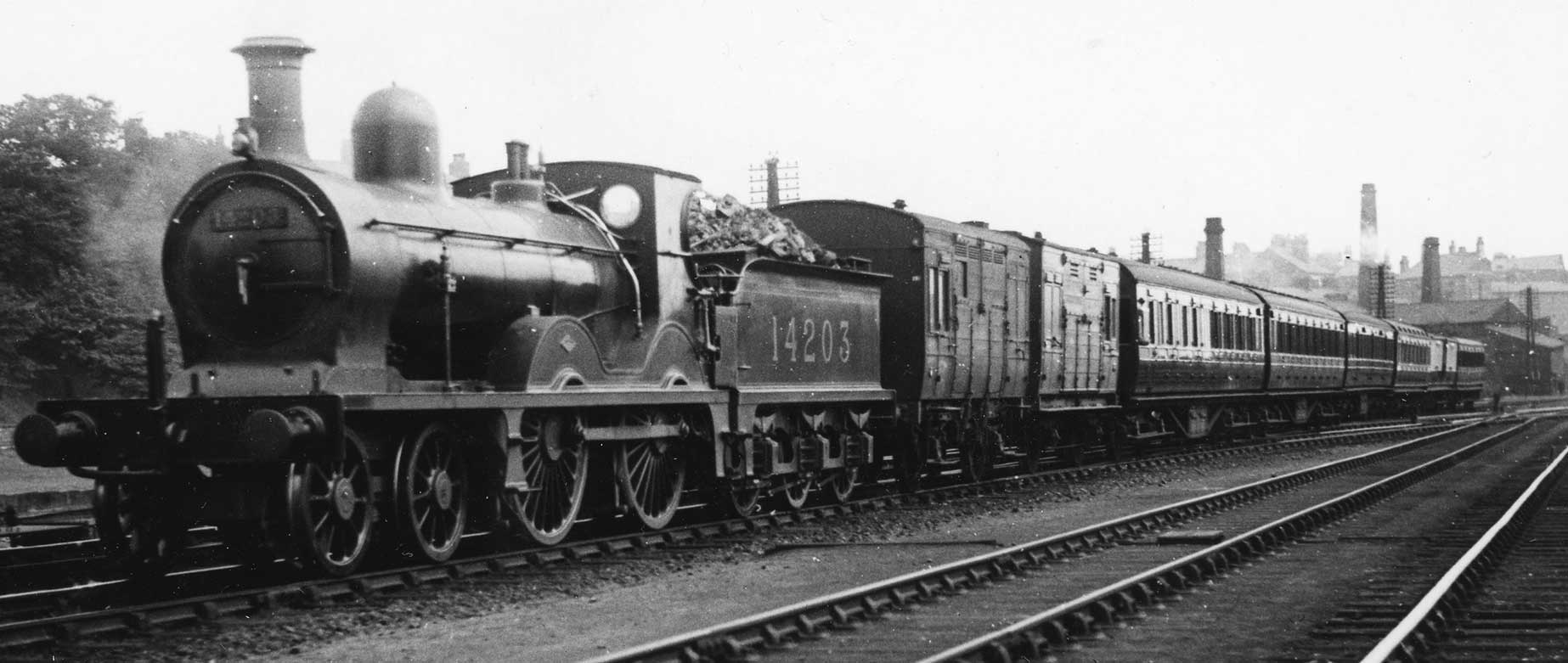
| LMS 1P / GSWR 336 (4-4-0) | Manson (PWJ hinged) cabside | GSWR 336 (350), (LMS 14203) | LMS-Soc - 14203 |
| LMS 2P / GSWR 240 (4-4-0) | Manson (PWJ hinged) cabside | GSWR 381/2/4/7/8/92 (LMS 14245/48/56/59/60/64) | SmugMug – 14264 |
| Caledonian Railway Locomotives | |||
| CR 179 Oban bogie (4-4-0) | Manson (C&O hinged) cabside | CR 1179-1188 * | SmugMug – CR 1181 |
| LMS 1P / CR 66 (4-4-0) | Manson (C&O hinged) cabside | CR 1069 | ~ |
| LMS 3P / CR 72 (4-4-0) | Manson (C&O hinged) cabside | CR 85 | RCHS archive – 85 |
| LMS 2P/3P / CR 766 (4-4-0) | Manson (HR hinged) cabside | LMS 14333, 14433 | ~ |
| LMS 3P / CR 900 (4-4-0) | Manson (HR hinged) cabside | LMS 14338 | Flickr – 14338 |
| LMS 3P / CR 55 (4-6-0) | Manson (C&O hinged) cabside | CR 51-59 (LMS 14600-14608) | Flickr – 59 |
| LMS 3P / CR 191 (4-6-0) | Manson (C&O hinged) cabside | CR 191-198, (LMS 14619-14626) | SmugMug – 14619 |
| Highland Railway Locomotives | |||
| HR F 'Duke' 4-4-0 | Manson (HR hinged) cabside | HR 60–69, 31, 71–75, 84 | Am Baile - 75 |
| HR I&AJR ‘Glenbarry’ 2-4-0 | Manson (HR hinged) cabside | HR 35 | SmugMug – 35 |
| HR H 'Raigmore' 2-4-0 | Manson (HR hinged) cabside | HR 29–30 | RCHS mdeia – 30 |
| HR L 'Skye Bogie' / LMS 1P 4-4-0 | Manson (HR hinged) cabside | HR 32-34,48,70,85-88 (LMS 14277/79–14285) | Rail-online – 14277 |
| HR D ''Strath' / LMS 1P 4-4-0 | Manson (HR hinged) cabside | HR 89–100 (LMS 14271–14276) | Flickr – 94 |
| HR E 'Clyde Bogie' / LMS 1P 4-4-0 | Manson (HR hinged) cabside | HR 76–83 (LMS 14278) | SmugMug – 14278 |
| HR I 'Jones Goods' / LMS 4F 4-6-0 | Manson (HR hinged) cabside | HR 103–117 (LMS 17916–17930) | SmugMug – 17924 |
| HR B 'Loch' / LMS 2P 4-4-0 | Manson (HR hinged) cabside | HR 119–133, 70–72 (14379–14396) | SmugMug – 14385 |
| HR C 'Small Ben' / LMS 2P 4-4-0 | Manson (HR hinged) cabside | HR 1–17, 38, 41, 47 (LMS 14397–14416) | Rail-online – 14398 |
| HR U 'Large Ben' / LMS 2P 4-4-0 | Manson (HR hinged) cabside | HR 60–63/66/68 (LMS 14417–14422) | SmugMug - 14417 |
| HR 'Snaigow' / LMS 3P 4-4-0 | Manson (HR hinged) cabside | HR 73,74 (LMS 14522,14523) | Flickr – 14523 |
| HR A 'Castle' / LMS 3P 4-6-0 | Manson (HR hinged) cabside | HR 26-30/35/50/58-59, 140-149 (LMS 14675–14693) | SmugMug – 14685 |
| HR 'River' / LMS 4P 4-6-0 | Manson (HR hinged) cabside | LMS 14756–14761 | SmugMug - 14758 |
| HR 'Clan' / LMS 4P 4-6-0 | Manson (HR hinged) cabside | HR 49, 51-57 (14762–14769) | SmugMug – 14762 |
| HR W / LMS 0P 0-4-4T | Manson (HR hinged) cabside | HR 25/40/45/46 (LMS 15051–15054)* | Rail-online – 15054 |
| HR X / LMS 4P 0-6-4T | Manson (HR hinged) cabside | HR 29/31/39/42-44, 64-66-68/69 (15300–15307) | Flickr - 39 |
| HR K 'Barney' / LMS 3F 0-6-0 | Manson (HR hinged) cabside | HR 134–139, 18–21 (LMS 17693–17704)* | Rail-online – 17698 |
| HR 'Clan Goods' / LMS 5F 4-6-0 | Manson (HR hinged) cabside | HR 75-82 (LMS 17950–17957) | Flickr - 57955 |
| LMS Locomotives | |||
| LMS 2P (4-4-0) | Manson (St.Rollox) cabside | BR 40603* | Flickr - 40603 |
| LMS 4F (0-6-0) | Manson (HR hinged) cabside | LMS 4251, 4312/14/15/17/18/28 | Rail-Photoprints - 44328 |
| LMS 8F (2-8-0) | Manson (St.Rollox) cabside | LMS 8319, 8336, 8623 {and others?} (all *) | |
| LMS 5P4F 'Crab' (2-6-0) | Manson (HR hinged) tender | LMS 13100-13109 (LMS 2805/06/08/09, 2907) (all *) | Rail-online - 13103 |
| LMS 5P5F 'Black 5' (4-6-0) | Manson (HR hinged) cabside | LMS 5003/007-18/020-29/081/083/086/098, 5115/138/157/158/160/162/163/171-77, 5319/320/355-62, 5457/458/471 (all removed by 1950s) | Flickr - 45138 |
| LMS 5P5F 'Black 5' (4-6-0) | Manson (St.Rollox) cabside | BR 44698/699, 44704/705/718-720/722/724/783-785/788/789/796-799, 44801, 44924/931/957/959-961/972/978-80/991/992/997-999, 45053/066/090/098, 45117/123/124/136/159/164/165/167/170/171/172/179/192, 45319/320/360/361/366, 45453/456-61/470/472-479/483/488/492/495-497. | Flickr - 44797 |
| BR Steam Locomotives | |||
| BR Standard 5MT (4-6-0) | Manson (St.Rollox) cabside | BR 73005/06/07/08/09 (* all removed by 1961) | Flickr – 73007 |
| BR Standard 4MTT (2-6-4T) | Manson (St.Rollox) cabside | BR 80004/05*/20/21/28/29, 80111/12/13*/14/15/21/22 | SmugMug – 80113 |
| BR Diesel Traction | |||
| EE / BR Class 20 (Bo-Bo) | Manson (St.Rollox) cabside | D8028-D8034 (all removed by 1973?) | Flickr – D8034 |
| NBL / BR Class 21 (Bo-Bo) | Manson (St.Rollox) cabside | D6138-D6157 (retained to withdrawal 1968) | Flickr – D6154 |
| BR Class 24 (Bo-Bo) | Manson (St.Rollox) cabside | D5114-D5132 (all removed by 1974) | Flickr – 5132 |
| BRCW / BR Class 26 (Bo-Bo) | Manson (St.Rollox) cabside | D5319-D5346 (all removed by 1973) | Flickr – D5344 |
| DMU BR Class 120 DMBC/DMBF | Manson (St.Rollox) van doors | SC51781-SC51787 (all removed 1980) | Flickr – SC51782 |


See Also
- Railway Operations
- Electric Token Block
- Closed Stations and Lines
- LMSR Class 5MT 4-6-0
- Stanier Class 8F
- LNER Class D49
- BR Standard 4MT 2-6-4T
- NBL Type 2 DE
- Class 24
- Class 120 DMU
External Links
- The LMS Society - Methods of Single Line Working ; Manson Apparatus ; Whitaker Apparatus ; Bryson Apparatus
- Steamindex.com LMS Journal - Bryson's catcher
- Wikipedia - North British, Arbroath and Montrose Railway
- Wikipedia - Great North of Scotland RailWay
- Wikipedia - Highland Railway
- Wikipedia - Callander and Oban Railway
- Wikipedia - Portpatrick and Wigtownshire Joint Railways
Photo Links
- Smugmug: LMS Stanier 5MT 5003, 1930s
- Getty Images: West Country 4-6-2 loco 34004 at Perth in 1948
- Flickr Gallery - Tablet Catcher fitted locos
- GNSR lineside apparatus ready for exchange at Stricken, Fraserburgh line (from GNSRA website)
- Am Baile: Highland Railway token exchange
- Rail-online: Driver leaning out Black 5 cab to remove tablet pouch
- Flickr: Tablet exchange at Gollanfield with Class 120 DMU
- The Transport Library: photo of Ivatt 4MT 43141 with Whitaker tablet catcher
- Flickr: photo of LMS Jubilee 45734 with Bryson socket on cabside
